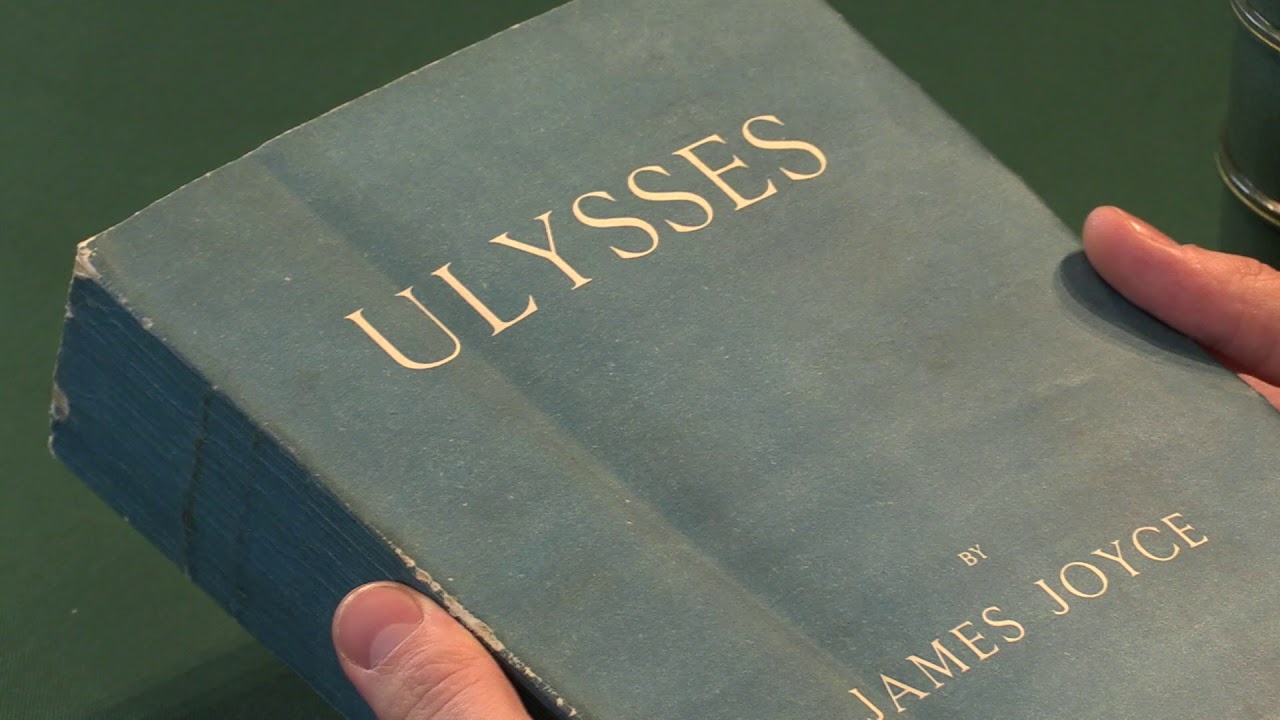
On March 15, 2013, three colleagues and I, on a prophetic whim, decided to read James Joyce’s Ulysses out loud. We finished on August 22, 2021. During this time significant events shaped our lives. One member sadly passed (requiescat in pacem). But we kept reading – between trips abroad, psychoanalytic study groups, conferences, the pandemic. Our voices developed different and unique patterns: quiet tone, precise articulation, Irish brogue. We usually met two or three times a month, sometimes accompanied by a glass of wine, green olives, sometimes Irish cheese.
So…”stately, plump” Buck Mulligan enters with a bowl of lather, and states with mock sacerdotal solemnity, “Introibo ad altare Dei.” We enter to spend the day with Leopold Bloom; we will walk with him through the streets of Dublin. We meet bawds in the night, braggarts in the pubs, royals in their castles, pols with their polls, priests, bishops, cardinals — they all come.
So many verbal and rhetorical styles populate Joyce’s unique use of language: Lists, catalogs, digressions, alliteration, stream of consciousness, portmanteau words, class-based brogue, fragments of Latin, French, Italian, Greek, German, and Gaelic!
As both an epic and Menippean satire, Ulysses reinvents conventions of the epic: invocations, myth, allusions, narrative immensity, gods and God, but it also answers the demands of the menippean form, composed in a way to put everything in the text—history, science, heroes and villains, old old stories, world religions—and just about everything else. Menippian satire is a hybrid fantasy. Joyce’s fellow Modernists—the grand triumvirate of Pound, Eliot and Himself—revolutionized the language and structures of the new art in their friendship and collaborative endeavor. (Indeed, Pound even added more languages to The Cantos—Provencal, Chinese, and Egyptian hieroglyphics. The Cantos might be called Menippean tragedy. Eliot called The Wasteland mock epic.)
Both beginnings and endings were important to all three authors. Joyce’s homage to Homer is sustained throughout Ulysses, rather than explicit at the beginning. Pound alludes to The Odyssey: “And then went down to the ship,/set keel to breakers.” In the “Wasteland,” Eliot refers to Chaucer’s Canterbury Tales through a paraphrase of Middle English, “April is the cruelest month….” Pound’s Cantos is an incomplete work, ending with fragments; but the repeated phrase, “I cannot make it cohere” is, in fact, the emotional ending. The Wasteland concludes with “Shanti Shanti Shanti”. But Joyce’s Ulysses ends with orgasm.
Joyce was a devotee of numbers, dates, details, and elaborations of these coordinates. In Ulysses Joyce obsessed on birth and death dates, on beginnings and endings. In that spirit: Joyce died on January 13, 1941 in Zurich; Pound in Venice on November 1, 1972; Eliot in London, January 4, 1965. We might elaborate. Eliot lies in the Poets Corner of Westminster Abbey, Pound in the famous cemetery of Isola de San Michele in Venice; but Joyce was buried anonymously, somewhere in Zurich. His wife, Nora, asked the Irish government to have his remains be buried in Ireland. But that was denied. Yet, his memorial may best be commemorated on the yearly celebration of Bloomsday, June 16, in Dublin, where the entire novel is read out loud, the day (in 1904).
Leopold Bloom did his walk around the city. (On the day of Pound’s death, in San Francisco, in North Beach, the entire text of The Cantos was read out loud.) Reading out loud has its aficionados.
We began our reading on March 15, 2013 and ended on August 22, 2021. It took eight years, five months, and six days. That means, 3,050 days, 73,167 hours, 4,390,020 minutes, 263,520,800 seconds. Latitude in San Francisco, 37.775 degrees, Longitude, -122.519 degrees. Latitude in Lakspur, 37.934 degrees, Longitude -122.535 degrees.
Once published, the novel received mixed reviews. A judge at its obscenity trial described it as “emetic…but not pornographic.” Some literature professors didn’t understand it, so they said, “Don’t bother.” Others made whole careers studying it. Snooty Virginia Woolf said “No, no, no.”
But on this centennial celebration we say: Oh Jimmie Joyce, you were a darlin’ lad, half blind as a bat, but you kept writing, writing; your batty daughter, Lucy, kept babbling, babbling, waking the voice of Finnegan. Thank you for this masterpiece of World literature! Thank you for the citizens of Dublin. But most of all, thank you for Molly Bloom’s “Yes, I said Yes, Yes.”
At the end of our reading, in spontaneous unison, we shouted in joyous voice through the Zoomaspere. RE-JOYCE!
Reading Ulysses Out Loud
On March 15, 2013, three colleagues and I, on a prophetic whim, decided to read James Joyce’s Ulysses out loud. We finished on August 22, 2021. During this time significant events shaped our lives. One member sadly passed (requiescat in pacem). But we kept reading – between trips abroad, psychoanalytic study groups, conferences, the pandemic.…
3–5 minutes
