The pandemic has opened up surprising refractions of embodied life: Working across extended geographies, meeting with each other in our respective homes, there is a blend of new distances and new intimacies. The frame stretches to form a surface for new configurations of creative analytic work, illuminating what is truly essential. Following Neville Symington (2012), psychoanalysis is most fundamentally an act of awareness and becoming, a reflective and relational process of creation that “transforms the inner emotional direction of life whose fruit is a new understanding of the world” (398). At the heart of this process is the capacity to be in relation with oneself and with the world: a simultaneous turning inward and outward. In the pandemic, just to have a body is startling. As we feel vulnerability keenly, psychoanalysis offers a practice of neither using the mind as escape from the body, nor the body as escape from the mind, but inhabiting both in concert with each other. In the context of education, bell hooks (1994) conceptualizes the notion of engaged pedagogy as a practice of freedom, which also poignantly illuminates the values at the heart of psychoanalysis. In liberatory learning, she notes, both teacher and student must be fully present as co-learners: “Engaged pedagogy does not seek simply to empower students. Any classroom that employs a holistic model of learning will also be a place where teachers grow, and are empowered by the process. That empowerment cannot happen if we refuse to be vulnerable while encouraging students to take risks” (21).
Taking up an engaged psychoanalytic practice requires a similar capacity to tolerate a new experience of vulnerability and discomfort—or even to appreciate the opportunity to learn more about what one has been doing all along. Whether in a traditional clinical setting or a community-engaged practice (and perhaps the distinction is not so neatly defined in the first place) we may be guided by hooks’ vision of a vitality that engages all the senses toward the task of learning as a process of self-actualization—notably, a self that is always a participant in a community. There is healing potential in the imaginative act of theorizing from embodied experience, and a move toward freedom for both self and collective, each ever more present in well-nourished wholeness.
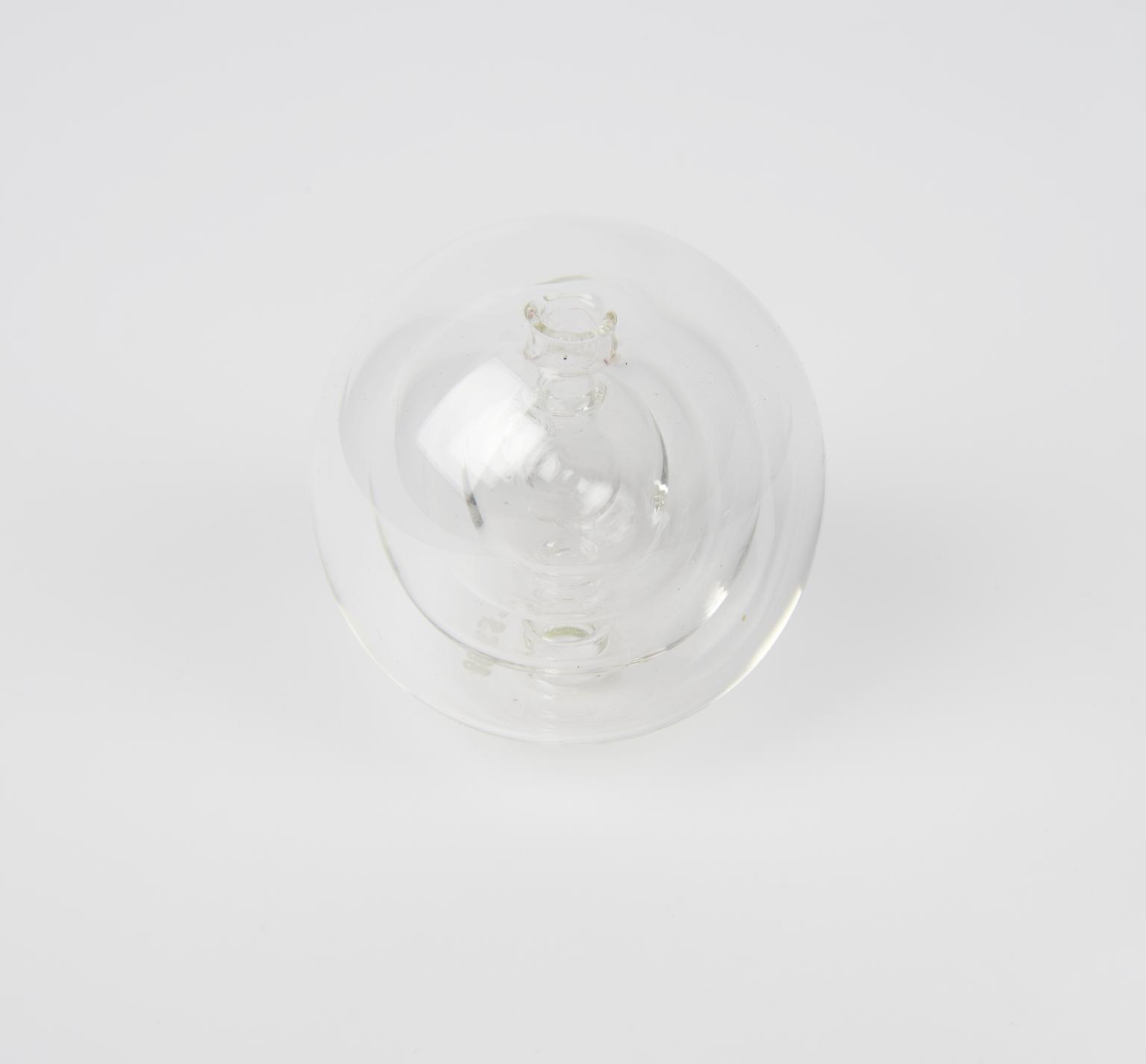
Metaphorically and phenomenologically, this vision involves an inversion of analytic spatiality. Francisco González (2020) proposes the figure of a Klein bottle (a mathematical object that can be imagined as a multidimensional Möbius strip) to illustrate the mutually constitutive relation between subjectivity and intersubjectivity. In this formulation, “psychic life is interstitial, located in the in-between: as a constant and reciprocal modification of internal and external groups, which reiterate and echo each other over time, creating a spiral movement; and as multiple nodes in a vast network of intersubjective chains, as individuals assemble in groups which in turn shape and recreate the individuals and their internal groups, creating a recursive, repeating pattern” (393). In other words, with a nod to Winnicott, the Klein bottle is a conceptual surface that exists and yet cannot exist, offering a container for analytic work while continuously inverting and refracting the relationship between inside and outside. The containing function may be understood as an emergent property of the dynamical relations that constitute the psyche as both self-within-world and world-within-self.
Within a relational field characterized by collective imagination, the psyche comes into being as a Klein bottle that is both container and contained, surfacing the intersubjective nature of both conscious and unconscious experience. In an exploration of the minor gesture in individual and collective psychic life, Erin Manning (2016) writes that this gesture “moves the nonconscious toward the conscious, makes felt the unsayable in the said, brings into resonance field effects otherwise backgrounded in experience” (7). Here analytic action is not located inside a fixed mind, nor even in a fixed relation between one mind and another, but in a dispersed relation of each mind with the whole field. Thus, I suggest, a feature of engaged analytic practice is a refraction of the symbolic function of nourishment. What is said and what is unsayable can both potentially create space for a transformative process that simultaneously feeds and is fed by the “complex compositional field of experience” (23). What is essential is a sense of relaxed freedom, and a vital interplay between the freedom to be silent and the freedom to speak. In this practice, we learn the difference between speaking about freedom and speaking freely.
References
González, F. J. 2020. “Trump Cards and Klein Bottles: On the Collective of the Individual.”
Psychoanalytic Dialogues 30 (4): 383–398.
hooks, b. 1994. Teaching to Transgress: Education as the Practice of Freedom. New York: Routledge.
Manning, E. 2016. The Minor Gesture. Durham, NC: Duke University Press.
Symington, N. 2012. “The Essence of Psycho-Analysis as Opposed to What Is Secondary.” Psychoanalytic Dialogues 22 (4): 395-409.
