Our flight landed in Cartagena. Beautiful Colombia, I thought, while invaded by Gabriel Garcia Marques descriptions of this country that I am about to encounter. The town he considered his own was the background for the many stories he narrated. The humid hot air reaches my nostrils, and I experience a simultaneous sense of comfort and discomfort, my body immersed in a very intense heat that squeezes sweat down my face right away. I enter in the taxi, and we have a conversation in Spanish while local music is playing. We arrived at the walled city, and the colors, sounds, heat, and people seemed familiar and overwhelming. We were greeted by a friendly and welcoming hotel staff, offered a cold local beer as we walked into our air conditioned hotel room. The protected cold atmosphere felt like a respite, and yet I was still drawn to the vibrant town around me. It was the middle of the day, and I wanted to explore the town for a couple days before the IPA conference would take me into a different landscape. As we walked around, people approached us trying to sell souvenirs or adventures, and we could barely walk without interacting with someone who insisted beyond our ‘no, thanks’. As we crossed the big entrance door, we stopped to watch a group of street dancers and musicians perform. My body vibrated with the loud drum sounds; my heart beat finding the world’s heartbeat. I was immediately transported to Salvador da Bahia, where I watched a roda de capoeira no Pelourinho when I was still a teenager. Colombia and Brazil united for a minute, held by the melodic pounding of the drums, our African Heritage so alive and deeply shared. I felt excited, and calmly curious. My Latin American deeply held experience came alive while the dancers stepped strongly on the floor, and moved their hips in a coordinated and sensual way. I wanted to join them, their colorful clothes, their powerful movements held by the deep and rhythmic drumming. Carnaval, after all, had a similar feel to me. Feeling strangely at home, I also noticed the tourists walking around in their swimming suits, big hats, nice clothes, being offered goods by locals. I wonder about the many facets of colonization, and the subtle ways in which it creeps up into our psyches normalizing and making invisible exchanges of exploitation and oppression.
Later in the day, we took a walking tour of the town. Our fun and friendly Colombian guide told us many stories of the main Spanish port for trafficking enslaved Africans, while describing the Barco negreros and its inhumane conditions that killed many Africans on their way. Standing there, I was transported to a time when slaves arrived and were offered to be examined, chosen and purchased. Deep sadness invaded my heart, as I listened to our guide telling us to treat the street vendors politely, refusing three times as they insisted on selling us their goods, and reminding us that they are working to raise their families. She told us about the big wall that was constructed to protect the town from pirates, as the town stored the gold extracted from the Spanish colonies. I find it ironic that the wall was built to protect stolen goods from robbers…
The heat was intense, I felt tired and sweaty, thirsty and carrying sorrow for the past still present. I don’t feel I know all about Cartagena, or can speak about the colonization experience of Colombia. I can only relate to it, frontiers between Colombia and Brazil merging in the big Amazon they each hold a piece of. The intense story reminded me of the way I experienced a sense of being robbed when visiting Portugal, and noticing the ways they take pride in their conquests of the world and their colonies, Brazil being one of the biggest ones. Our gold, their wealth. Their king, our king, one crown. Their language overimposed the many languages our Native people spoke, their culture erasing the culture that existed before.
During my Cartagena trip, as I usually do when traveling, I excitedly brought a new book to read. This time it was “Salvar o fogo” by Itamar Junior Vieira. I was captivated by this book and its main characters – Moises, Mundinho, e Luzia. Living in a small rural community in the inner landscape of Bahia, Tapera do Paraguacu, they suffered the deep destructive effects of colonization that invaded the collective and subjective growing like weeds. Tapera’s Afro-Indigenous population endured generations of exploitation, in the shadows of the power of the Catholic Church. Luzia, unable to find a way to exist in a community that was forced out of their cultural beliefs, suffered the effects of being made invisible while unable to integrate the many parts of her ancestral narratives. Luzia was the daughter of an African mother and Indigenous father. Throughout the book, we notice her attempts to navigate an imposed catholic faith that turned her into a feared ‘witch’ in her community. She endured a hunchback that grew from the abuse and oppression she had to withstand. With Luzia, we discover that haunting ghosts of a family are intertwined with haunting ghosts of the country, in this tale that uncovers the dilemmas of colonization. Following her steps, I experienced deep sorrow for the subtle ways in which she tried to belong and appease. The church at the center of the town held a school – place where the children would be initiated in the Catholic faith while being convinced to let go of their ‘primitive, native’ cultural beliefs, clear manifestations of the devil. Enduring a tragic destiny, Luzia tried to contend with the colonial power while being dehumanized in the process. Junior Vieria walks us through the intense ways in which the colonizer’s power infects relationships and subjectivity, their control becoming invisible and without possibilities of resistance. The assault on cultural beliefs is deep and normalized, justified through the dehumanization of the colonized, who in a desperate attempt to be included either assimilate or attack each other.
In and out of Luzia’s journey, we booked a mangrove canoe tour. Our animated taxi driver Luis told us the story of the small village we were going to. The fishermen’s village Boquilla located at the northern point of Cartagena holds its Afro-Caribbean roots. La Boquilla was first settled in the 18th century by runaway slaves who organized camps known as palenques. Slavery was abolished in Colombia in the 19th century, and the population in Cartagena during the 17th century was more than 20% enslaved people from Africa. As we drove towards La Boquilla, we encountered tall buildings while Luis told us about gentrification that meant property taxes became too expensive for the villagers. After Colombia enacted the 70 Law, which officially recognized Afro-Caribbeans as a distinct ethnic group and offered a legal foundation for the defense of Afro-Caribbean territorial rights, the town was divided. La Boquilla community did not have to pay the high property taxes allocated to the inhabitants of the big buildings, which helped maintain the community.
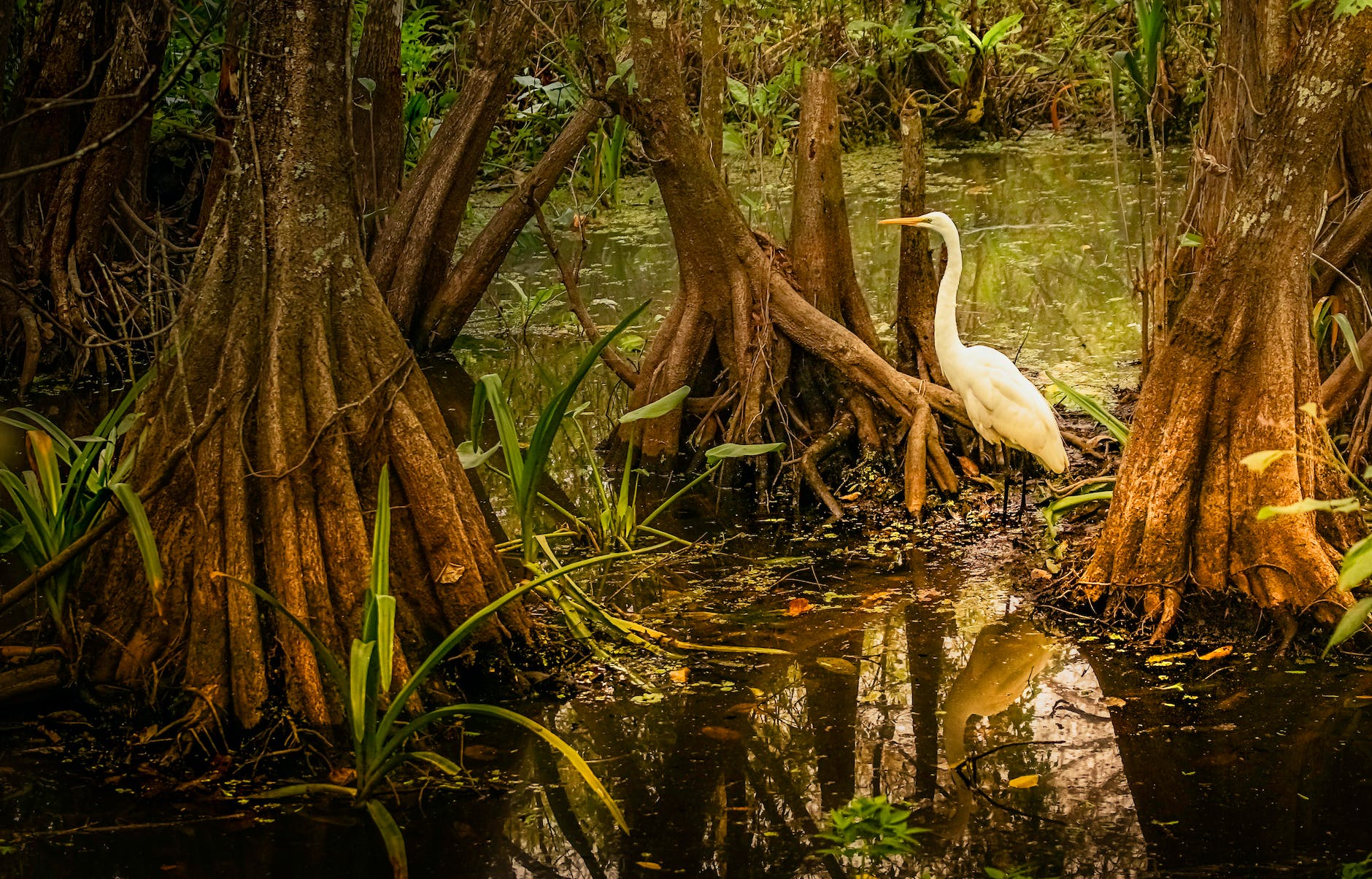
The fisherman village focused on eco-tourism to maintain itself and to protect its natural resources and mangroves. We entered the village through the long beautiful and quiet beach, in opposition to the crowded experience in the streets of walled Cartagena. We finally arrived at the small house where our canoe driver waited for us. The silent canoe rode smoothly into the mangroves while I was held by the melodic voice of our guide, telling us about the ecosystem and showing the animals and birds that thrived in the landscape. We encountered men fishing, and animals hiding. Coconut water was waiting for us when we arrived back, and I noticed some kids playing in the dirty road. The village was calm, and inviting.
On our way back, the village felt like a distant dream as we walked into the crowded walled city and out of it in the direction of the Cartagena Convention Center, where the conference was going to be held. I wondered about this separation, the wall to protect the riches that were accumulated and the invisible La Boquilla, resting at the margins fighting hard to build protection around it. As I entered the air conditioned Convention Center, relief from the heat provided some comfort while I wondered about the walls dividing psychoanalysis and the community. The walls between my privileged life and La Boquilla residents’ experience, which are marked by the colors of their history and ancestors.
As I connect with my experience in Cartagena, I am painfully aware that I cannot remember the names of my guides and drivers. Even though we held animated conversations and I still remember their voices and faces, I realize their names landed in a forgotten area of my mind, making me notice the powerful and deep impact of colonization in which others are made invisible in our collective sphere and even more in our minds. Deeply sad, I was invaded by a thought and a fantasy about a psychoanalytic conference that would reach the world and be in contact with the community around us, beyond and outside the air conditioned Conference rooms. A conference that would honor names and heritage by coming close. I felt uncomfortable noticing the discrepancy of our moving from one conference room to the next, in Cartagena but also not. I heard some conversation about the discomfort with the ways in which keynotes were focusing so much on the social, and how about the intra-psychic? Shouldn’t we be talking about that, isn’t Psychoanalysis the intrapsychic after all?
There is more to tell you about Cartagena, Colombia, Brazil and the artificial divisions that we collectively create. I realize my experience at the IPA Conference belonged to the encounter with La Boquilla, the mangroves, and its community. A community inaugurated as resistance, and that fights back and runs away from oppressive control. A community that survives beyond walls and its false sense of protection. A community that honors their ancestral history, maintains contact with nature, and finds ways to protect the earth and its richness, at least for now. A community that resists invisibility, even when my mind cannot hold them fully.
It also was amplified by my dialogue with Luzia and her difficult journey through the Brazilian disguised/forgotten colonizing history. Subjectivity exists in the precarious contact with others and the narratives that orally hold us together. The intrapsychic was never disconnected from the social. Without recognizing and giving voice to domination and oppression, to the ways in which we collectively create walled cities pushing out and dehumanizing through social dynamics of othering, we are unable to make sense of our subjectivity and each other. We are unable to make sense of the intergenerational stories that hold and limit our psyche and define our unconscious. The invisible calls us, showing its faces and screaming its voices, if only we are open to listen.
More than ever, psychoanalysis needs to attend and engage with the mangroves, the palenques, the Luzias, the unnamed other, all of us (psychoanalysts included) who are subjectively constituted within collective and social constraints.
References:
Junior Vieira, I. (2023). Salvar o Fogo. Todavia: São Paulo.
