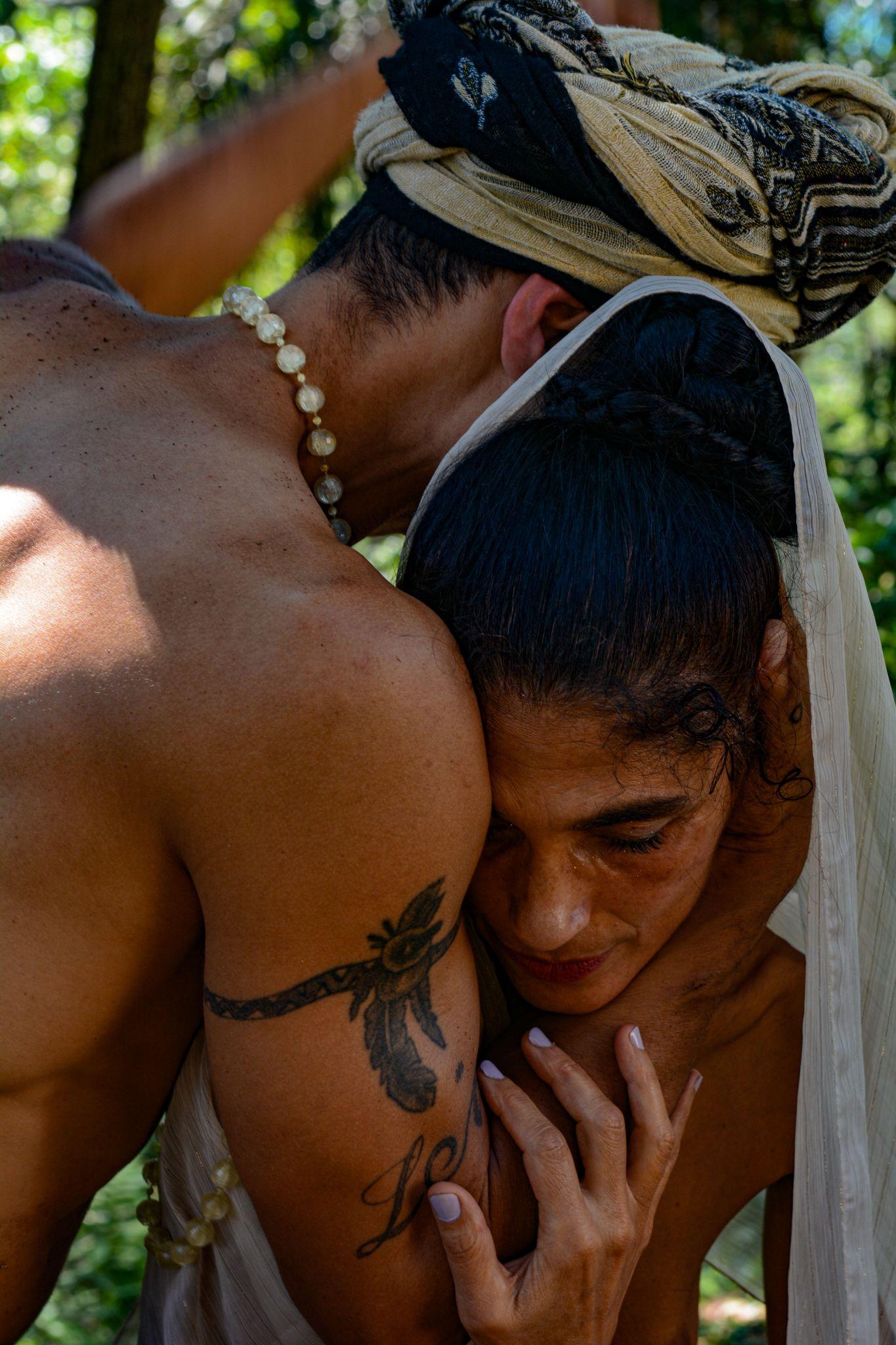
Carolina Bacchi interviewed Christiane Laurito about her photographs “Lascívia”, “Alento”, and “Partidas e Chegadas”, published on Critica Spring 2023 Vol. 5 (This is a bilingual interview, translated from Portuguese to English)
Carolina: Sabemos que o seu trabalho fotográfico tem focado em viagens a comunidades quilombolas e outras comunidades tradicionais no Brasil, com o intuito de dar mais voz a essa comunidade. Você poderia nos contar mais a respeito desse seu trabalho?
We are aware that your work focuses on traveling to traditional and quilombola communities in Brazil with the goal of giving them a voice. Could you tell us a little more about your work?
Christiane: Sempre gostei muito de viajar pelo Brasil, e quando chegava a algum destino, tinha muita vontade de conhecer as pessoas nativas da região, saber como viviam e os desafios que enfrentavam com os avanços do turismo e maior acesso da população a ambientes que, até então, poucos anos antes, eram territórios ainda pouco explorados. Dava sempre um jeito de conversar com os pescadores, com os trabalhadores rurais, com os funcionários das pousadas onde me hospedava. A vida foi seguindo, fui trabalhando na minha área de formação, cuja trajetória foi sempre marcada pela psicanálise, e nos últimos anos eu voltei a me dedicar a uma paixão muito antiga: a fotografia. Saí para praticar, fui estudar e durante um curso de Fotografia Documental, conheci um profissional incrível, o João Roberto Ripper, que vem dedicando o trabalho de toda uma vida para as comunidades tradicionais do Brasil, colocando sua fotografia a serviço dos Direitos Humanos. Desde a primeira vez que o ouvi falando de seu trabalho, fiquei arrebatada! Entendi, imediatamente, que era isso que eu queria fazer com a fotografia. Não apenas porque ele dá visibilidade a comunidades relegadas ao esquecimento e todos os tipos de negligências de nosso Estado, que lhes retira acesso aos direitos mais básicos, mas especialmente porque ele desenvolveu uma maneira de documentar essas populações de forma a dignificar esses sujeitos. Aprendi com ele, tendo o privilégio de o acompanhar durante viagens para algumas dessas comunidades, que o mais importante é se ambientar no lugar onde eles vivem, compreender a realidade deles, ouvir suas histórias, acolher suas alegrias e suas dores – e somente depois disso, depois de tornar-se um pouco parte daquela realidade, junto deles, é que tomamos a liberdade de fotografá-los. Os registros que surgem disso carregam consigo os laços de afeto que criamos com essas pessoas, o profundo respeito que sentimos por suas histórias de vida, suas raízes e seus tantos saberes. É isso que espero que as pessoas enxerguem na minha fotografia: as belezas dessas pessoas que são, geralmente, invisíveis para o próprio povo brasileiro, que desconhece, assim como eu também desconhecia, nosso próprio país, os muitos “Brasis” que existem.
I have always enjoyed traveling in Brazil. Usually when I go somewhere, I have a desire to know the native people of the region, to know how they live. I am also curious about the challenges they may face in response to the advances in tourism and greater access to territories that used to be unexplored before. I always tried to talk to the fishermen, rural workers, and even owners or workers of the pousadas where I stayed. As my work as a psychoanalyst evolved, for the last few years I decided to dedicate more time to an old hobby and passion: photography. During a Documentary Photography course, I met an incredible professional, João Roberto Ripper, who has dedicated his entire life’s work to the Brazilian traditional communities, focusing his work as a photographer on the defense of Human Rights. Since the first time I heard him talking about his work, I was deeply touched! I understood, immediately, I would like to follow a similar path as a photographer. Not only because it gives visibility to communities that have been forgotten by all types of negligence of our government, which removes access to the most basic human rights, but especially because Ripper has developed a way to document these populations while offering back their sense of humanity and dignity. I have learned with him, while I accompanied him on trips to some of these communities, that the most important thing is to set the scene in the place where they live, understand their reality, listen to their stories, cherish their joys and their dreams – and only afterwards, after becoming somewhat part of that reality, together, we take the freedom to photograph them. The pictures then carry with them all the bonds of affection created, and the deep respect that we feel towards their life stories, their roots, and their knowledge. I hope people will find in my photography the beauty of these communities that are generally invisible to the Brazilian people at large, who are unaware, like I once was, of the many “Brazils” that exist within our country.
Carolina: Qual tem sido a sua experiencia em fotografar essas comunidades?
Can you tell us more about your experience in photographing those communities?
Christiane: Tem sido as experiências mais ricas de minha vida, e, ao mesmo tempo, as mais desafiadoras. Primeiro porque tenho que tentar, ao máximo, suspender aquilo que carrego da minhas próprias origens e condições de vida, em muitos aspectos, tão diferentes do que encontro nessas comunidades. Nasci numa condição privilegiada social e economicamente, então minhas referências são diferentes das deles. Nunca passei por privações, nem sofri discriminações. Sei o abismo que nos separa nesses aspectos. É um desafio se abrir para o novo, para aquilo que vou encontrar em cada um desses lugares, desde a forma de organizar a moradia, o tipo de alimentação, os hábitos de vida, as prioridades. Um exercício de realmente se abrir para a alteridade, e, pouco a pouco, encontrar aquilo que também pode nos unir enquanto sujeitos, e a partir disso, criar laços de afeto com eles. Foram tantos aprendizados…eles têm conhecimentos muito diferentes dos meus, que sempre vivi num grande centro urbano. Sem contar o fato de eu adorar ouvir suas histórias de vida, a maneira que encaram as dificuldades, a força para persistir diante de tantas adversidades. Foram muitos os momentos de encontro com muitas dessas pessoas, encontros marcados por abraços, olhares amorosos, admiração e trocas genuínas de afeto.
Uma das descobertas mais linda têm sido testemunhar a relação que eles mantêm com a natureza que os cerca: é dela que extraem alimento para suas refeições, e também o seu sustento, com a agricultura e a pesca, por exemplo, que lhes permite a venda de alimentos. Mas, ao mesmo tempo, são os principais guardiões dessas riquezas naturais: eles sabem que a preservação dessas áreas ambientais são fundamentais para a manutenção da própria existência da comunidade, e também, do nosso território brasileiro. Eles preservam os rios, as matas, os peixes, e outros animais, sem o interesse de exploração comercial destes, sem ganância.
Além disso, é de um aprendizado ímpar a possibilidade de testemunhar nessas comunidades o que pouco se encontra nos grandes centros urbanos de nosso país: os laços de solidariedade entre as pessoas e a maneira de buscar soluções coletivas para os problemas que enfrentam. São inúmeras as dificuldades que sofrem, no campo da saúde, da educação, do saneamento básico, e de outros recursos, uma dura realidade. Mas eu presenciei muitos exemplos de resiliência, de saídas criativas para os problemas, e, especialmente, de ajuda recíproca entre os moradores das comunidades. Há um senso de coletividade que vem se perdendo cada vez mais na nossa sociedade, mais e mais individualista, e almejando conquistas que priorizam os interesses pessoais, em detrimento do bem maior de uma comunidade. Junto aos quilombolas, percebi que temos muito a aprender, se quisermos evoluir como sociedade, e para isso, talvez tenhamos que voltar e conhecer melhor as nossas próprias raízes como povo brasileiro, e o que ainda se mantém dessas tradições, como marca de nossa(s) identidade(s).
Those have been the richest experiences of my life, and at the same time, the most challenging. First and foremost, I have to engage with my own privileged upbringing while recognizing how deeply different it is from the people who live in those communities. I am socially and economically privileged and therefore my perspective and references are necessarily diverse from theirs. I never experienced deprivation nor discrimination. I am aware of the abyss that separates us. It is a challenge to open oneself to what one will find in each of these places, beginning from the organization of the houses, the diet, the lifestyle habits, and even the priorities. It is an exercise in truly opening oneself up to otherness, and, little by little, finding something that can also unite us as subjects, and from there, create bonds of affection with each other. I have learned so much. Their knowledge is so different from mine, who always lived in large urban environments. I, however, always loved to hear their life stories, the way they face difficulties, and are forced to persist in the face of so many adversities. I have had many encounters that were marked by hugs, caring gazes, admiration and genuine exchanges of affection.
One of the most beautiful discoveries has been to testify to the relationship that those communities maintain with the nature that surrounds them. Nature provides them food and livelihood. Beyond eating they also sell what they grow or fish. At the same time, they are the main guardians of these natural riches: they are aware that the preservation of these environmental areas is fundamental for the maintenance of the community and the Brazilian land. They preserve rivers, forests, fish, and other animals without the interest of commercial exploration or need for profit.
Furthermore, it has been a unique learning experience to witness the ties of solidarity and collective problem solving that we find in these communities and rarely find in large urban areas. There are countless difficulties those communities face like the lack of basic sanitation or access to health care and education, which makes for a very harsh reality. However, I witnessed several examples of resilience, creative solutions, and, especially, reciprocal help among the inhabitants of the communities. They maintain a sense of collectivity that has been lost more and more in our individualistic society, leading to prioritizing personal interests at the expense of the community’s improvement. With the Quilombolas, I realized that if we want to evolve as a society we still have a lot to learn. We may need to return to our roots as Brazilians and the traditions that mark our own identity.
Carolina: Qual o contexto das fotos “Lascívia”, “Alento” e “Partidas e chegadas” publicadas na Critica?
What is the context for the pictures “Lascívia”, “Alento” e “Partidas e chegadas” published inon the Spring 2023 issue of Critica?
Christiane: Antes de tudo, fiquei muito contente com o convite de publicá-las na Critica. Essas fotos aqui mencionadas não foram realizadas em nenhuma comunidade tradicional, fazem parte de ensaios com outros temas, fotos que fiz durante minhas experimentações e meus estudos no campo da fotografia. Mas entendo que a fotografia nunca é um retrato daquilo que vemos, não é mera reprodução da realidade externa. É aquilo que vemos, a partir daquilo que existe no nosso mundo interno, nos nossos sonhos, fantasias, e também conflitos, dramas, enfim, questões que estão em busca de elaboração. Entendo que sempre têm partes do fotógrafo nas imagens que ele faz com a câmera. As lentes são como um intercâmbio entre o interno e o externo, uma brincadeira nesse espaço; é assim que entendo, por exemplo, o espaço potencial teorizado pelo Winnicott. Então, quando fiz as fotos (que foram publicadas na última edição), eu estava em pleno processo de questionamento a respeito do significado da fotografia na minha vida, querendo entender o que de fato me movia nesse campo, o que eu queria fotografar…e achando que teria que me distanciar da minha profissão, que não poderia conciliar essas duas coisas. Estava num período maior de silêncio, de um retorno para mim mesma, pensando nos meus dilemas entre ir para mundo, desbravar outros territórios, e ao mesmo tempo, querer ficar onde há segurança, alento, onde há o sentimento de pertencimento. Isso foi antes de começar a fazer as viagens pelas comunidades tradicionais, mas foi lá, com esses povos, que fiz a relação entre minhas próprias questões e esse tema tão caro a eles: o pertencimento, onde eles encontram lugar de morada. É preciso se conhecer muito, se conectar profundamente com aspectos mais obscuros, mergulhar nos nossos silêncios, estar só com nosso corpo e nossa mente, para então dar abertura para aquilo que é mais verdadeiro do nosso desejo. Acho que essas três fotos falam um pouco sobre isso. E nesse processo todo entendi que a fotografia pra mim, especialmente conhecendo pessoas que tem um modo de vida tão diverso do meu, é uma forma de me conhecer, de construir minha(s) identidade(s), pois acho que somos muitos em nós mesmos.
I was very excited about the possibility of publishing those pictures with Critica. The pictures published in Critica’s Spring 2023 issue were not taken in a traditional community. They were actually taken as part of my studies in photography. I believe that photography is never only a portrait of what we see, or a mere reproduction of external reality. A photograph is actually what we see emerging in our internal world, our dreams, fantasies, and also conflicts that are in search of further elaboration. The photographer is always sharing parts of themselves with their audience. The lenses capture this exchange between the internal and external, the area of play – the picture emerges in the potential space as it was conceptualized by Winnicott. When I took the photos (which were published in the last edition), I was in the middle of the process of questioning the meaning of photography in my life, trying to understand what really moved me into this field, or what I wanted to photograph… and fearing that I would have to distance myself from my profession, that I would not be able to reconcile photography and psychoanalysis. I was in a major period of silence, of a return to myself. When I was thinking about my ambivalence between the desire to explore new territories while not wanting to let go of what is predictable and secure and what would give me a sense of encouragement and belonging. All this was before starting my trips to the traditional communities. However, it was with them that I realized that my deepest dilemmas overlapped with what mattered the most to those communities: the sense of belonging and a feeling of home. In order to find that, one needs to connect deeply with darkness and silence, be in connection with one’s body and mind, in order to find one’s deepest desire. I believe those pictures speak to that experience. Through this process I understood what photography means to me – it is a way, especially through meeting people who have an experience so diverse from mine, of knowing myself, of building my own identity(s).
Carolina: Como você entende o link entre o impacto social do seu trabalho e a psicanálise? Você poderia nos falar mais do seu trabalho fotográfico atual e do link com o seu trabalho como psicanalista?
How do you understand the link between the social impact of your work and psychoanalysis? Could you tell us more about your work as a photographer and its link with your work as a psychoanalyst?
Christiane: A psicanálise tem muito a contribuir para o mundo, não somente no tratamento clínico, dentro dos consultórios. A psicanálise extramuros tem alcances muito importantes no campo social, em diversas instituições (escolas, hospitais gerais, judiciário, etc). E não se trata de usar a psicanálise para, necessariamente, atender pessoas nessas situações, mas de pensar que o psicanalista tem uma leitura de mundo atravessado pela maneira como apreendeu a psicanálise; e, portanto, a maneira como um psicanalista estabelece relações com os outros, seja lá em qual ambiente for, pode produzir mudanças.
Para explicar melhor o que quero dizer, posso afirmar que tive a alegria de presenciar, mais de uma vez, o impacto nas pessoas fotografadas ao verem seus próprios retratos nas imagens impressas. Entendo que isso é um efeito subjetivante, na medida em que meu olhar de fotógrafa acabou por produzir um investimento libidinal no outro, que, por vezes, modifica a imagem que a pessoa tem de si mesma.
Lembro de uma mulher quilombola que estava bastante recolhida em sua dor quando cheguei a sua comunidade, num projeto que envolvia outros fotógrafos. O marido a havia deixado para se casar com uma moça muitos anos mais nova, com quem já havia tido um filho, recém nascido. Ele abandonou a casa, a liderança da comunidade, que até então era exercida por ele, deixando também seus pais, já idosos, aos cuidados da ex mulher. Ela estava muito entristecida, se sentindo desvalida, e bastante solitária. Pouco se cuidava, destinando a energia que ainda lhe sobrava para cuidar dos pais, dos sogros e dos netos, que a visitavam algumas vezes. Durante o período do nosso projeto fotográfico, ela foi se aproximando e quis contar a história da sua vida, envergonhada por ter sido rejeitada e mostrando uma visão de si mesma muito negativa. A nossa presença em sua casa, minha e de outras duas fotógrafas bastante sensíveis, começou a ocupá-la, querendo cozinhar pra gente, conversar e nos levar para conhecer a região. Ela contou que adorava ir nadar no igarapé, uma espécie de rio daquela região. E nos convidou para acompanhá-la. Naquela ocasião, seu sorriso voltou a aparecer: virou um dia de festa para as crianças, ela se divertia e nos convidou para voltar lá com ela nos dias que se seguiram. Fizemos muitas fotos desses momentos, e também de seu cotidiano e das pessoas que a cercavam. Havia algo se modificando nela. A transformação mais impressionante foi quando, antes de irmos embora, lhe pedimos para escolher sua melhor roupa para fazermos retratos dela, em sua casa, a qual arrumava e cuidava com todo o zelo e capricho. Ela mesmo se surpreendeu completamente com o resultado das fotos. Não só porque havia se enfeitado, mas porque sua expressão estava diferente, algo nela foi revitalizado, e era notável que estávamos vendo as fotos de uma mulher bela, altiva, vivaz. Era outra mulher, estava potente. Então, entendo que a psicanálise me permitiu fazer uma leitura do momento que ela estava vivendo, de luto e tristeza, e até mesmo, de certa melancolia. E como psicanalista, sabemos escutar as dores humanas de modo a legitimá-las, sem a preocupação de que isso seja logo superado. Saber esperar para falar, saber esperar o tempo daquilo que o outro precisa atravessar. Faz toda a diferença alguém se sentir, de fato, escutado. Nessas conversas com ela, e também durante as fotos que fazíamos, entendo que ela foi recuperando partes de seu self que estavam numa espécie de adormecimento. A força dessa mulher diante de tudo o que aconteceu em sua história, desde antes desse casamento, era algo muito impactante. E, pouco a pouco, acho que ela foi percebendo que nós, fotógrafos, enxergávamos esses recursos dela, e que nossas imagens retratavam isso. Fomos revelando as belezas, onde até, então, ela só via feiura.
Nessa situação, e em muitas outras vividas nessas andanças nas comunidades tradicionais, a fotografia dialogou com temas muito caros à humanidade, como a questão das origens, do enraizamento, do pertencimento, de se sentir existente/visível no mundo. Assim como o oposto disso, que joga essas pessoas no isolamento, no preconceito, na invisibilidade. E a psicanálise tem muito a pensar e contribuir com tudo isso.
Psychoanalysis has a lot to offer beyond our consulting rooms. Community psychoanalysis has a significant impact on the social field (schools, hospitals, hospitals, judiciary, etc.). This impact is not only through offering treatment to individuals in those institutions. It is not about using psychoanalysis to, necessarily, offer treatment to people in need, but rather the psychoanalyst’s view of the world is traversed in by psychoanalysis; and, therefore, the way a psychoanalyst establishes relationships with others, regardless of the environment they are immersed in, may produce changes.
To better explain what I want to say, I can affirm that I have had the joy of witnessing, more than once, the impact on the people photographed of seeing their own portraits in the printed images. I believe that my libidinal investment revealed through my lens is communicated, and at times, has produced an effect of changing the person’s photographed self image.
I remember one experience that was very meaningful to me and reflects what I am trying to convey. When I arrived at the community, there was this woman who was withdrawn and stayed in her bedroom. Her husband had left her for a younger woman who recently had a baby. He abandoned his home, the leadership position he had had in the community, and his elderly parents, whom she was taking care of. She was very sad, feeling helpless, and quite lonely. She had no energy to take care of herself, allocating what she had left to take care of her parents, her in-laws, and the grandchildren who visited once in a while. During the period of our photography project, she approached me slowly, wanting to tell me the story of her life, embarrassed by having been abandoned and showing a very negative view of herself. Our presence in her house offered comfort, and she wanted to cook for us, talk to us, and show us around. She told us she loved going swimming in the Igarapé, a river in the small village. She invited us to accompany her. During that afternoon, her smile appeared again: children joined us, she had fun and invited us to come back on the days that would follow. I took many photos of those moments, of her life and the people she was close to. I noticed that something was changing.
The most impressive transformation was when, before we left, we asked her to choose her best clothes to make her portraits inside her house, which she cared for with all her zeal and whim. She was completely surprised with the photos when she saw them. Not only because she had groomed herself, but because her expression was different, something in her was revitalized, and it was noticeable that we were seeing the pictures of a beautiful, confident, vivacious woman. She was another woman, empowered by her own image. I believe that psychoanalysis allowed me to understand the moment she was experiencing, of mourning, grief and sadness, and beyond that, melancholy. And as a psychoanalyst, we learn how to legitimate and recognize others without an expectation or need to surpass it. We learn how to wait while allowing the other to traverse what they need to on their own terms. It makes all the difference if someone can be truly heard. Through our conversations and photo shoots, she was able to recover parts of herself that she had lost and were in a state of numbness. Her strength in the face of her story, even before her marriage, was inspiring. And, little by little, she realized that we, photographers, could register her emotional resources, and our images portray them. We revealed the beauty, where she only saw ugliness.
In this case and so many others, I experienced in my journeys through traditional communities, I found that photography allowed a dialogue with themes deeply foundational to our human condition: our relationship to our origins, our need for roots and sense of belonging, our profound need to be seen by others and our collective. When one can’t have those, one is thrown into isolation, prejudice, and invisibility. Psychoanalysis has a lot to offer as a way of theorizing and intervening on those issues.
Carolina: Como você vê o impacto social do seu trabalho? E o impacto artístico?
How do you see the social impact of your work?
Christiane: Entendo que dar visibilidade a esses povos tradicionais é uma forma de defender a existência deles, já que vivem sob constante ameaças, especialmente no que diz respeito ao risco de serem retirados de seus territórios, de suas moradas. Essa é a maior luta deles…apesar de haver muitas comunidades tradicionais pelo Brasil (não somente de quilombolas, mas de indígenas, vazanteiros, seringueiros, marisqueiras, caatingueiros, ribeirinhos, e outros), ainda não há garantia de demarcação de suas terras, conforme previsto pela lei e pela nossa Constituição Federal. E o que ouvi de diversas pessoas das comunidades que conheci foi o desejo de permanecer onde nasceram e sempre viveram. Ainda que os jovens saiam para buscar estudo em cidades próximas, a ligação com as tradições e o seu povo continua forte, é para lá que querem voltar, muitas vezes trazendo contribuições para a própria comunidade a partir de seus novos conhecimentos adquiridos fora. Então, retratar e documentar as comunidades tradicionais é um compromisso social, ético e político. É mostrar ao mundo o cotidiano deles, a relação que mantêm com a natureza, com o trabalho que lhes dá identidade. É também mostrar as tantas belezas desse nosso povo, desconstruir a ideia de que a vida que levam não pode ser definida só pela privação e necessidades que passam: há enorme riqueza no seu modo de viver, marcado pela sua religiosidade, suas tradições, suas festas e rituais, a arte, o artesanato e tantas outras expressões da nossa cultura popular.
I believe that giving visibility to communities is a way to give them a voice, considering they live under an ongoing threat of being removed from their lands and homes. This is one of their greatest struggles. Even though there are many traditional communities in Brazil (not only Quilombolas, but indigenous people: vazanteiros, seringueiros, marisqueiras, caatingueiros, ribeirinhos, and others), there is still no guarantee of demarcation of their lands , as provided by law and our Federal Constitution. What I heard repeatedly from various people in those communities was their desire to remain where they were born and always have lived. Even when young people leave to study in nearby cities, their ties with traditions and their people continue to be very strong, and they always want to return and many times they make contributions to their own community based on the new knowledge acquired abroad. In fact, portraying and documenting traditional communities is a social, ethical, and political commitment. It shows the world their daily life, the relationship they maintain with nature and their work, and gives them back their identity. It also shows so many beauties of their world, deconstructing the idea that their lives may only be defined by deprivation and need. There is enormous wealth in their way of living, marked by religiosity, traditions, festivities, rituals, art, craftsmanship, and so many other expressions of our Brazilian popular culture. ●
