The phone rings downstairs. You’re roused from a dreamless sleep with a splitting headache. The phone is ringing. It’s July 1971, answering machines not a thing yet, let alone call waiting and voicemail. Just phones that live on walls, on countertops and desks, phones with long, coiled cords you wrap around your finger as you talk. Phones that aren’t in your pocket. Phones that accuse you with their ringing. You manage to get up somewhere around the fifth ring, negotiate the stairs outside your bedroom door and make it to the phone affixed to the wall downstairs, nine or ten rings in.
“Hullo?”
“Scotty, It’s your Aunt Bette.”
“Oh. Hi Bette!” Never has she called just you in your twenty-one years.
“Scotty, it’s your dad. It’s happening, right now. You need to come home.”
“It’s happening?” You don’t understand.
“Scotty, your dad is fading now. He’s dying. You need to get here now.”
“Oh. Oh. Okay. Now? It’s happening now?”
“Yes, honey, now. Right now. Come as soon as you can.”
“Okay. Okay.”
You hang up and climb the stairs back to the second floor. You enter your room, the bed, a mattress on the floor, in the middle of the room. You get back in bed and pull the Indian print covers over you.
You fall into a state that is not exactly sleep. More like a twilight state of suspension. It reminds you of being a kid of thirteen, lying in your bed upstairs on a Saturday afternoon in November, feeling suspended over an abyss of darkness and uncertainty. Downstairs, the television has been on all day, low voices describing the confusion of the president having been assassinated, then his assassin being assassinated. You saw the second killing live on TV, the man named Jack Ruby walking up to Lee Harvey Oswald in the basement of the Dallas police station, firing a gun into Oswald’s chest and killing him right there. You hear your father, watching along with you, go “Oh!” Just “Oh!” The slightest of sounds registering the greatest of shock.
The funeral on the D.C. street the next day, the constant drumbeat as the black-draped, horse-drawn carriage is drawn up Pennsylvania Avenue, the widow walking alongside with two children, all of them dressed in black. The too-quiet voices of the TV commentators. You lie in bed upstairs in your bedroom, not knowing what’s happening. Depression, your first taste of that dark suspension, time ceasing to exist. Everyone in shock. You, your family, your town, your country, no one knowing what to do but watch and worry. Oh. Oh.
You lying in your bed eight years later, in the house you share with your college roommates in Bloomington, Indiana, head throbbing from drinking and smoking weed the night before at a party outside of town, meeting a girl you wanted to get to know better, staying late, not getting to bed until 3 a.m. Now, four hours later, the call, then you’re suspended over an abyss, in a timeless state, not believing yet knowing full well what’s happening. He’s fading now. He’s dying. Oh. Oh. Okay. Now?
You last saw your father a few weeks ago. How many? Two. Three. You were trying to complete coursework to graduate on time, so you weren’t at home as his lung cancer went from bad to worse, metastasizing to every organ. Driving back and forth the two-and-a-half hours between Bloomington and Richmond. Bloomington, where you lived and wanted to be, where your college friends were, where your life was now; Richmond the place you were from, the place where he’s dying. You remember feeling never in one place, always going from one town to the other. In Bloomington, you’re working as a server at the Fireside Inn, hanging out with friends, a little tripping with LSD and mescaline, but never a good, clear connection to the unknown, cluttered with the stuff back home. You need to be there. You don’t know where to be. At home, you feel useless, pulled by the incompletes you need to finish college. Something he never did.
Did you know he was dying? No one said the word, but you knew. They had moved a hospital bed into the TV room, once he no longer could climb the stairs to their bedroom. You were looking into the Mayo Clinic a few months prior, then looking into taking him to Mexico for some miracle cure involving laetrile, a substance in almonds and apricot pits that turns to cyanide in the gut. Supposedly eats the cancer cells. Crunchy granola chemo. We knew the futility of it. What we didn’t know was how to face it, and each other.
He was open and vulnerable then, seemed like he wanted to be close to you, maybe for the first time in your lives together. Neither of you knew how.
The time you were talking to an old girlfriend on the front porch and he’s in the bed in the TV room and he cries out.
“Scotty,” he says.
You go in the house. “Yes, Dad?”
He looks dazed, like he’s just awoken from a dream. “I just want to see you get settled,” he says.
“I will, Dad. I’ll get settled.” You didn’t know what that looked like, what that meant, getting settled. It wasn’t your plan. It would take you years, decades, to get settled. Maybe you never got settled, not in the way he meant.
Around the same time, maybe the same weekend at home, he says to you, “Scotty, don’t smoke. Don’t smoke cigarettes.” You don’t remember what you said. You do remember you smoked for years after that, rationalizing that there would be a cure by the time you were his age.
This vulnerability was new in him. This fear, this openness. Before, it was judgment, disapproval, scolding, him conveying how disappointed he was in you. Avoiding him, the snap of his finger at the dinner table when you’re talking about your school day and he’s watching the Huntley-Brinkley Report on the TV over your shoulder. The snap, like Thor’s hammer, saying without words, “Shut up, I’m watching the news!”
You lie in bed and wish for a dreamless sleep, time stopped, problem solved. Not solved, no sleep, and this massive headache will not relent. Now, it’s happening now? The present moment, the one you will valorize and seek for the rest of your life, the one you tattoo on your left forearm decades later. That present moment, undeniable. It’s happening now.
You get up, dress quickly, and get in the car. How long were you suspended over that abyss? Later, you’ll lie to your Aunt Bette when she asks what took you so long. You say something about having to get your car out of the repair shop across town. You drive north to Indianapolis, then east toward Richmond. You make it in two hours. You pull in the Reid Memorial Hospital parking lot, enter the hospital, and somehow find his room. Everyone is there, arrayed around him. Mom, the triplets, Linda, Aunt Bette, and Grandma Lines, who buried her husband, my grandfather, the year before. He lies there, in a coma, slightly breathing.
“Tom,” someone says. “Tom, Scotty’s here.”
No response from him, his breathing shallow, barely noticeable, yet I can feel his awareness of my presence. We stand there around him, all assembled now. Within a few minutes, he stops breathing. Someone says, “Oh.”
Something you had heard, attributed to Paul McCartney, comes to mind. Close the eyes of the dead when they die. You reach over, dissociated, thinking this is what a good son would do, what a man would do. You don’t remember ever touching his face before. You lightly place your index and middle fingers on his eyelids, his grey-blue eyes fixed on the ceiling. You pull them shut.
“Oh, Scotty,” your grandmother says.
Later that day, after some kind of tasteless meal laid out on the table by the breakfast nook, you’re lying on the couch in the TV room, staring at the screen, not watching. The room where the hospital bed had been, somehow now removed. You have a stomachache, you’re nauseous, flattened out.
Your Aunt Ruth, the one who used to protect you from his caustic wrath when he’d been drinking, the one who said on several occasions, “Leave the boy alone, Tom!” That Aunt Ruth, seeing you lying on the couch, near to puking, says to you in a matter-of-fact tone, “I know why you’re sick. Your dad just died and you’re sad, but you’re not crying.”
You have a recurring dream for years afterwards. Your father returns. He can’t say where he has been, and it’s understood that his mysterious sojourn can’t be talked about. The wonder of his return is just that, a wondrous feeling. Wherever he had been, he was back now, with all of you, in this almost breathless state of reunion. He’s different, open, the way he was before he died, in those moments of vulnerability you witnessed so briefly at the end.
You wish for the dream’s return again and again. But dreams operate on their own dream-logic and will not be summoned thus. But, decades later, in your years-long psychoanalysis, you have several dreamlike moments of connection where you go looking for him. With your analyst silently watching, holding space, you burrow into the ground of his grave, over and over, session after session. You dig down to his coffin and lie on top of it. You enter his coffin and lie on his remains, somehow strangely intact, like he was in life. You send letters and birthday cards and Father’s Day cards to Tom Lines, Earlham Cemetery, Richmond, Indiana, with the fantasied understanding that the groundskeeper, the grave-keeper, without question, takes the cards, the letters, and plants them in the ground above his grave like so many American flags on Veterans Day, the words on the paper, like the paper itself, decomposing, joining him.
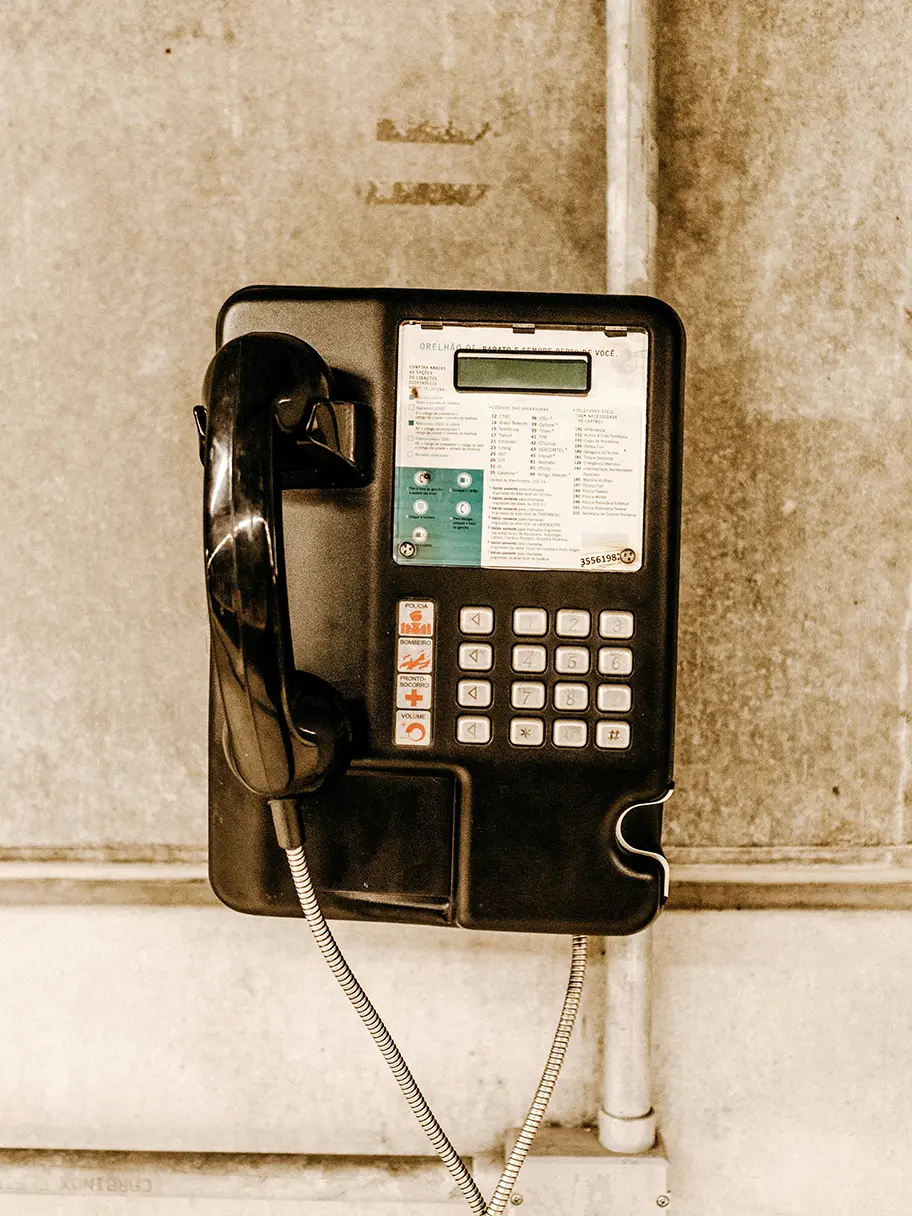
The Phone on the Wall
The phone rings downstairs. You’re roused from a dreamless sleep with a splitting headache. The phone is ringing. It’s July 1971, answering machines not a thing yet, let alone call waiting and voicemail. Just phones that live on walls, on countertops and desks, phones with long, coiled cords you wrap around your finger as you…
7–11 minutes